Managing a strata or multi-unit property in Australia is a real handful theres always something on your to-do list – and one of the most eye-catching & high-priority jobs is keeping the building looking its best through proper painting. In cities like Sydney where the environment is tough, and property values are sky high, strata painting is no longer just a chore its a smart investment.
From high-rise apartment blocks to townhouses, to all sorts of mixed-use developments, strata painting projects are a whole lot trickier than the standard suburban or even commercial jobs. You need a plan, some coordination, to make sure everything runs smoothly and to the letter, and a fair bit of technical expertise to deliver a result that satisfies everyone – from the owners and tenants to the regulators. Some companies like Painters Link Group are so well-known for these kind of projects.
What’s So Special About Strata Painting Projects?
The thing is, strata painting is fundamentally different from single-house projects because you’re dealing with multiple stakeholders who all have different ideas about what should be done, surfaces that can be really difficult to work with, and tight deadlines to meet.
1. Multiple Interests to Manage
Strata painting projects involve a bunch of different people and groups:
- The owners corporation
- The property manager
- The tenants and residents
And the committee members – each of these stakeholders has got their own expectations and you need to manage them all throughout the project.
2. Big-Scale Jobs
Unlike painting a single home, strata properties are made up of loads of different areas that need to be painted – like:
- External facades
- Internal common areas
- Balloconies and stairwells
- Car parks and basements
- Stairwells and corridors
And each of these areas needs to be done differently too.
3. Keeping the Place Running While You Paint
Most strata buildings are occupied by tenants or residents while you’re painting, so you’ve got to find a way to:
- Minimize the disruption
- Keep people safe and able to get in and out
- Work out a schedule that lets you get the job done without causing too much hassle
Why Strata Painting Matters So Much
Keeping up with regular painting is a must for strata buildings if you want to keep them looking good and standing up to the elements for years to come.
- Protecting the Asset
- Paint acts as a protective barrier against things like:
- Moisture getting in
- UV damage from the sun
- Pollution and dirt building up
If you don’t look after your paint, surfaces will deteriorate and you’ll need to do repairs all over again – and that can be really expensive.
Keeping Property Value Up
A building that’s been properly looked after is going to be a real winner when it comes to selling or renting it out – a building with faded or peeling paint just won’t hold its value.
Meeting Compliance and Safety
Strata buildings have got to be up to scratch with Australian safety standards and regulations. That means things like safe access systems, proper coatings, and making sure you’ve got a workplace safety plan in place.
The Strata Painting Process
You need a plan to get a strata painting project done right. Here are the steps to follow:
1. Initial Inspection and Reporting
You start with a site inspection to get a good look at what you’re working with. This means checking:
The surface condition
What the existing paint is like – is it still good or is it failing?
Any structural issues like cracks or water damage
What access you’re going to need
You put all this together in a report that helps everyone understand the scope and what the budget will be.
2. Planning and Scheduling
Strata painting is all about planning ahead to minimize disruptions. This means:
- Breaking the job down into smaller sections
- Coordinating with residents so you’re not disturbing them when you dont need to
- Scheduling noisy or messy jobs for a time that wont cause too much trouble
- Good communication is the key to avoiding complaints and delays.
3. Surface Prep is the Most Important Bit
The prep work is the most critical part of the painting job – and if you dont get it right, the paint wont last long. Typical prep involves:
- High-pressure cleaning
- Pulling off any loose or failing paint
- Fixing cracks and damaged areas
- Treatings any mould or mildew
- Applying a coat of primer
4. Applying Coatings and Finishing Up
Different areas need different paint systems – like:
- External walls need a special coating to protect them from the weather
- Metal railings need treatment to stop them rusting
- Internal areas might use a paint that’s low in VOCs to keep the air clean
- You can use brands like Dulux, Wattyl, or Taubmans – they’re all good performers in the Australian conditions.
5. Final Inspection and Handover
You need to make sure the job is up to scratch before you hand it over. This means:
Doing a thorough inspection to make sure everything meets the standard
Once you’re happy, you hand over the keys and the job is done.
Access Methods for Strata Buildings
Getting to the areas you need to paint is one of the biggest headaches in strata painting – but you can use different methods to tackle it.
Scaffolding
If the building isnt too tall, and you need a safe and stable way to get up to the areas you need to paint, scaffolding is a good option.
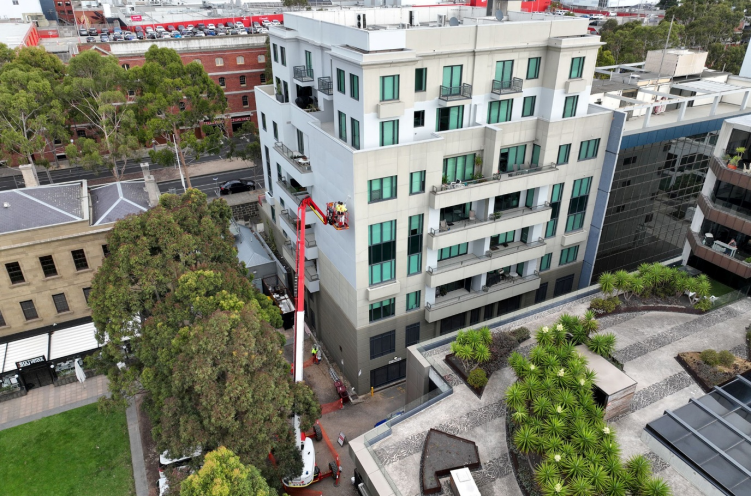
Boom Lifts
If you can get to the areas with a bit of open space, a boom lift is a good choice – theyre faster to set up than scaffolding.
Rope Access (Abseiling)
For high-rise buildings or areas where scaffolding just wont work, rope access is a good option. It saves time and can be more cost-effective.
Choosing the right access method is all about getting the job done safely and efficiently.
Common Challenges in Strata Painting
Strata projects throw up a bunch of unique challenges – but you can solve them with a bit of creativity.
Weather Conditions
Rain, or heat, or humidity can all cause problems when you’re painting – so you need to plan ahead to avoid delays.
Different Materials Needing Different Treatment
Different parts of the building will have different materials – and each one needs a different treatment. For example:
- Concrete needs crack repairs
- Metal needs rust treatment
- Timber needs sanding and sealing
- Getting Resident Feedback on the Job
If you dont communicate properly with the residents, you can end up with a whole heap of complaints and delays. So make sure you keep them posted on what you’re doing and why.
Budget Constraints
Strata committees often have to work within a fixed budget – but you can still get a good result if you’re smart about it. It all comes down to balancing cost and quality.
How Often Should Strata Buildings Be Painted?
It’s a good idea to repaint a strata building every 5-10 years, depending on the location and conditions. Here are some rough guidelines:
Exterior surfaces: every 5–10 years
Internal common areas: every 5–7 years
High-traffic areas: more often if they need it.Regular inspections can make a big difference in spotting problems early, which in turn can save you a heap of cash in the long run.
Sustainability in Strata Painting
Sustainability is quickly becoming a major priority in Aussie property management – and thats no surprise.
Low-VOC Paints
These really do make a difference in indoor air quality and are a much safer option for residents.
Durable Coatings
Use a long lasting system and you’ll be painting less often – good news for the environment and your wallet.
Waste Management
Making sure you get rid of the right stuff responsibly and keeping an eye on resources are a big part of what makes a project more sustainable.
Choosing the Right Contractor for Your Strata Project
Finding the right painter for the job is actually one of the biggest decisions you’ll make on a strata project.
So what should you be looking for?
- A contractor with some real experience on strata & complex jobs
- A clear plan for the project & good communication
- At least some knowledge of Australian standards & compliance
- Someone who can sort out access and safety requirements
- A strong portfolio & references
- A contractor with all the right skills to successfully manage the whole job
An experienced painter will not only give you quality work but will also sort out all the little details – the sort of things that will drive you mental if you’re not careful.
Learn More About Commercial and Strata Painting
If you’re doing a big strata or complex painting job and want to know how to get it done right, you might want to check out Sydney Commercial Painting Company– they’ve got the inside scoop on Access Methods, Coating Systems, and all the other important bits.
Final Thoughts
Strata painting in Australia is a wee bit more complicated than just rolling up your sleeves and getting on with it – its a bit of a logistical nightmare if you don’t know what you’re doing. You need to be able to plan, coordinate and understand how buildings work.
In a city like Sydney, where the weather is as changeable as a politician and property owners expect a lot, keeping your building looking its best is crucial for protecting your investment and keeping your property worth something in the long run.
If you approach painting as a bit of a chore, you’re going to end up with second-rate results that look rubbish and don’t do the job properly.